


Recent headlines in the enterprise software space remind us that even the largest organizations are vulnerable to unilateral changes by their cloud vendors. Cases like the ongoing dispute between Broadcom, VMware, and Tesco highlight that contractual agreements alone may not protect operations or finances.
Even if your organization currently has no issues with its cloud vendor, including a vendor exit strategy in your risk management framework is a must. Planning ahead protects your business from unexpected changes, pricing surprises, or support issues that could otherwise cause disruption.
Why Enterprises Need a Vendor Exit Strategy
The Broadcom–VMware–Tesco situation underscores a critical lesson for the cloud industry: contracts are not a guarantee of operational safety. Enterprises can face serious disruption if a vendor exercises unilateral control. The message is simple: always have a Plan B.
A vendor exit strategy is a structured plan that allows an organization to safely transition away from a cloud vendor without disrupting critical services.
Why do you need it? Because too many things can happen: sudden changes in pricing models or licensing terms of your current vendor, modifications to support offerings or service levels, forced product upgrades, mergers, acquisitions, and much more.
Without a plan, these risks can lead to operational downtime, productivity loss, and reputational damage. For organizations in regulated industries, outages may also result in compliance violations with standards like GDPR, HIPAA, or PCI-DSS.
Even short interruptions can be costly: according to Forrester, a composite organization experiences an average downtime cost of $9,513 per minute, equating to $570,776 per hour, due to critical incidents.
How to Structure a Vendor Exit Strategy
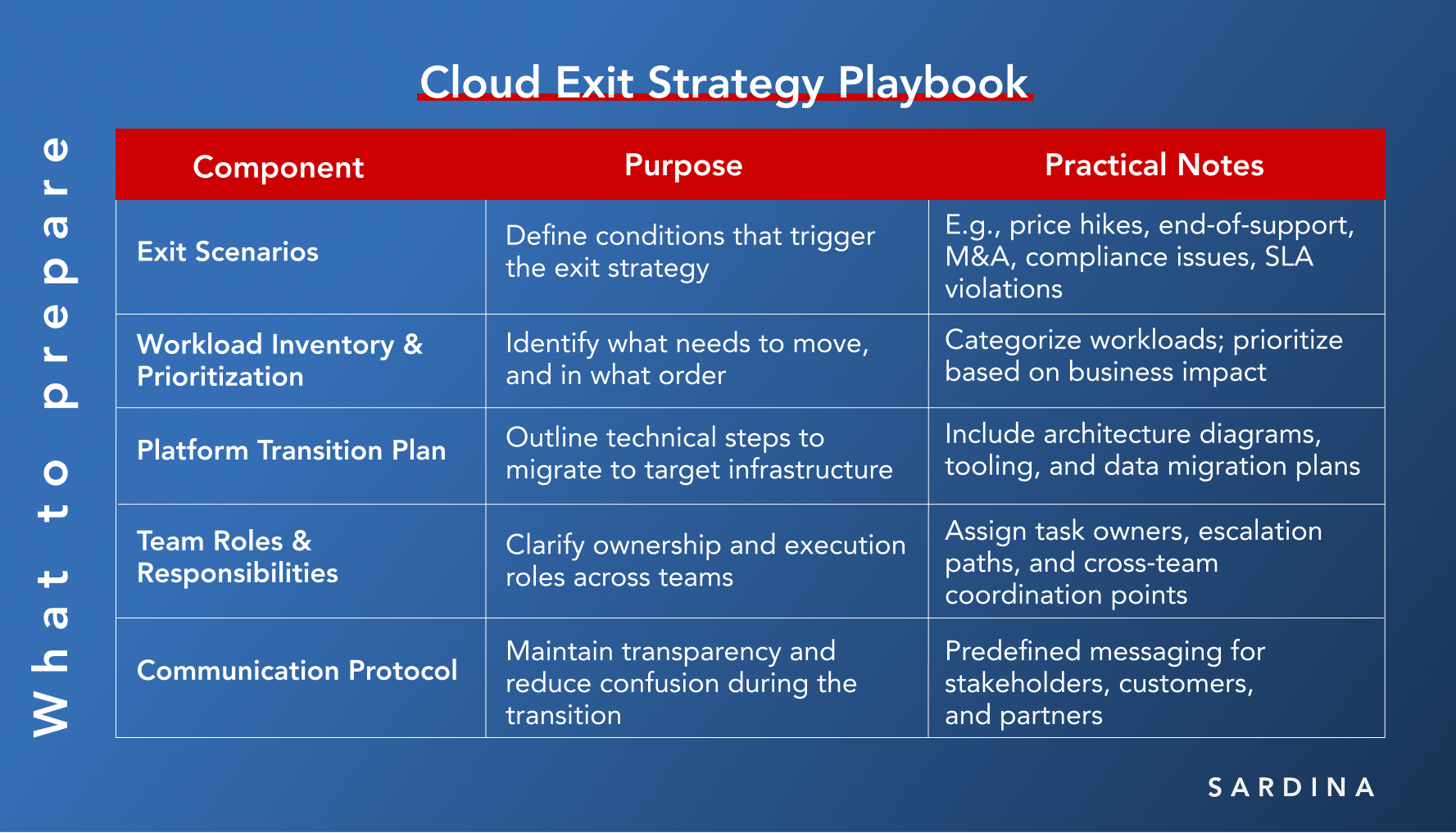
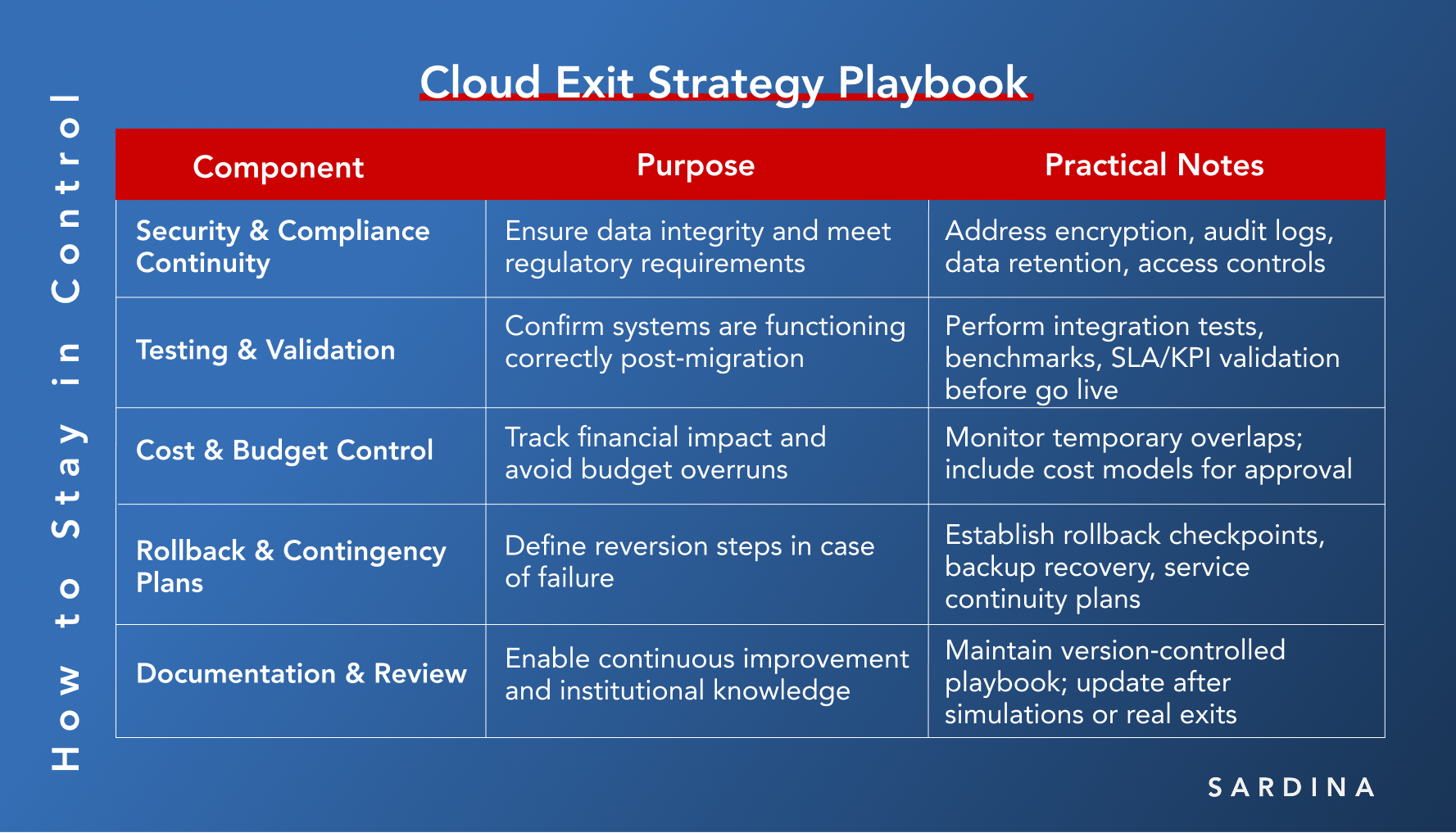
A comprehensive exit strategy should address four key aspects:
1. Technical
Using open standards and interoperable systems reduces reliance on proprietary technology and makes migrations less risky.
It’s also important to have a clear plan for critical services, with workflows and dependencies mapped out.
2. Contractual
Most responsibility here falls on the legal/procurement team. Licensing, support agreements, and service-level commitments need to be fully understood and include clear exit clauses in case of price increases, changes in support, or other unexpected vendor decisions.
3. Financial
Financial planning is crucial. Having a migration reserve and factoring possible vendor changes into TCO (total cost of ownership) gives your organization room to maneuver. Evaluating open source alternatives alongside proprietary solutions also helps weigh cost, flexibility, and long-term strategic fit.
4. Operational
This aspect includes maintaining up-to-date documentation, training your teams to handle vendor-related disruptions, and having a clear communication plan for stakeholders. This all would help keep the business running smoothly if a transition becomes necessary.
Why Open Source Can Be an Effective Exit Path
Transitioning to open source cloud platforms provides significant advantages. Whether deployed on-premises or as hosted solutions, open source has the following advantages:
- Flexibility: No single vendor controls feature access, licensing, or product roadmap
- Scalability: Infrastructure can be expanded (or downsized if needed) without restrictive contracts
- Cost predictability: No sudden price increases or opaque licensing models
- Control: Enterprises retain ownership of their operations, reducing the risk of lock-in and single points of failure.
Certainly, moving from a proprietary cloud environment to an open source platform requires a structured approach. An effective migration plan typically includes:
- Assessment: Mapping workloads, applications, and data dependencies to understand migration complexity.
- Platform evaluation: Selecting the right open source technologies (OpenStack, Kubernetes, Ceph, etc.) and deployment model (on-premises or hosted) that align with business objectives.
- Planning and design: Building a detailed roadmap with timelines, sequencing of workload migration, risk analysis.
- Testing and validation: Conducting pilot migrations, performance benchmarking, and compliance checks to ensure systems function as expected.
- Execution and training: Migrating workloads in phases, with staff training and operational readiness built in to support long-term success.
Some managed open source providers understand the complexity of this process and offer hands-on support.
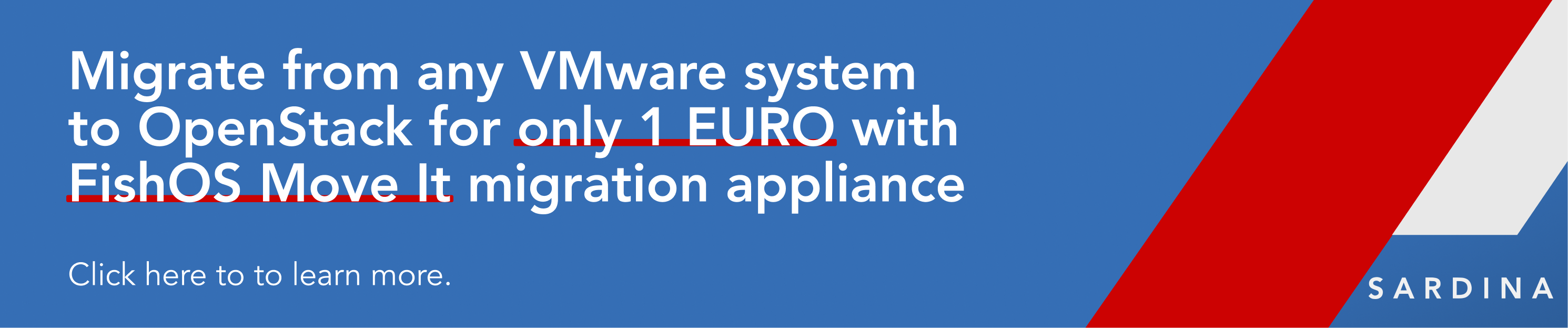
At Sardina Systems, we see migration planning as a critical success factor, which is why we provide a tailored migration plan as part of our service (with a nominal fee of 1 EUR), helping enterprises move to open source cloud with confidence and minimal disruption.
Real-World Examples
Sardina Systems has supported multiple enterprises in executing cloud vendor exit strategies. Each client had unique motivations, but all benefited from the flexibility and control of FishOS, our cloud management platform built on OpenStack, Kubernetes, and Ceph.
For Incarta, a leading Australian IT provider for the health sector, operational control over clinical workloads was non-negotiable. In healthcare, technology failures can directly impact patient outcomes.
“As the cluster will host clinical workloads, there are no circumstances under which Incarta can accept vendors having the authority to disable platform functionality. Preventing this kind of risk is one of the key reasons we favour open source infrastructure.”
Marcus Young, Co-Founder at Incarta
PT Federal International Finance (FIFGROUP), a major Indonesian financial services provider under ASTRA Financial Services, saw the cost of VMware subscriptions rise sharply while the platform’s lack of flexibility constrained their business growth.
“We wanted the VMware alternative that was easy to use with minimal training, efficient support, and enough flexibility to support our existing hardware and software setup. Container, multi-tenant, and API support were also a big plus. FishOS met all these requirements at a good price point with enterprise support, so we decided to execute the migration to this cloud platform.”
Mardelis Lubis, IT Data Center Architecture Senior Analyst at FIFGROUP
In Germany, GRASS-MERKUR, an established IT services company, faced scalability limitations with Nutanix and the added challenge of discontinued OpenStack driver support. The move to FishOS enabled rapid deployment of a multi-tenant cloud platform capable of meeting diverse customer requirements.
“Our previous system fell short in terms of cost-effectiveness and capacity for further business growth, compelling us to seek a new solution that could rapidly deploy a production-ready cloud platform while ensuring multi-tenancy and segregated spaces for diverse client needs.”
Markus Dietz, Head of Business Development & Sales at GRASS-MERKUR
Conclusion
Vendor changes, pricing shifts, and support modifications are realities in enterprise IT. A robust vendor exit strategy is not optional: it’s essential for operational continuity and risk management. Open source cloud platforms, such as FishOS, provide the technical, operational, and financial flexibility enterprises need to maintain control and ensure business resilience.
Contact Sardina Systems today for a free consultation with our experts and discover how open source can support your vendor exit strategy while helping you build a more efficient, scalable cloud.