


Explore how Sardina Systems helped deploy Datacomm Diangraha’s largest data center yet, DC4, enhancing their infrastructure.
In March 2023, Datacomm Diangraha, a renowned IT service provider in Indonesia, set out a pivotal challenge. Driven by growing resource demands from their customers and a strategic decision to move away from colocation, Datacomm decided to launch a new data center in Bekasi, West Java. This ambitious project aimed to not only redistribute resources but also double the capacity of their existing data centers combined.
To bring this vision to life, Datacomm turned to Sardina Systems and our trusted FishOS cloud management platform, which had been their reliable partner for several years.
Initial Request and Objectives
Datacomm Diangraha, a reputable IT service provider in Indonesia, has over 30 years of experience catering to diverse clients, including telecommunication and financial companies, enterprises, and government agencies.
By early 2023, the company recognized the need for a new data center deployment as it faced increasing requests for GPU, container, and other computing workloads. It became clear that they needed a new robust and efficient solution.
As an active adopter and advocate for open source solutions, Datacomm already ran part of its infrastructure on FishOS, a fully automated OpenStack-based cloud management platform.

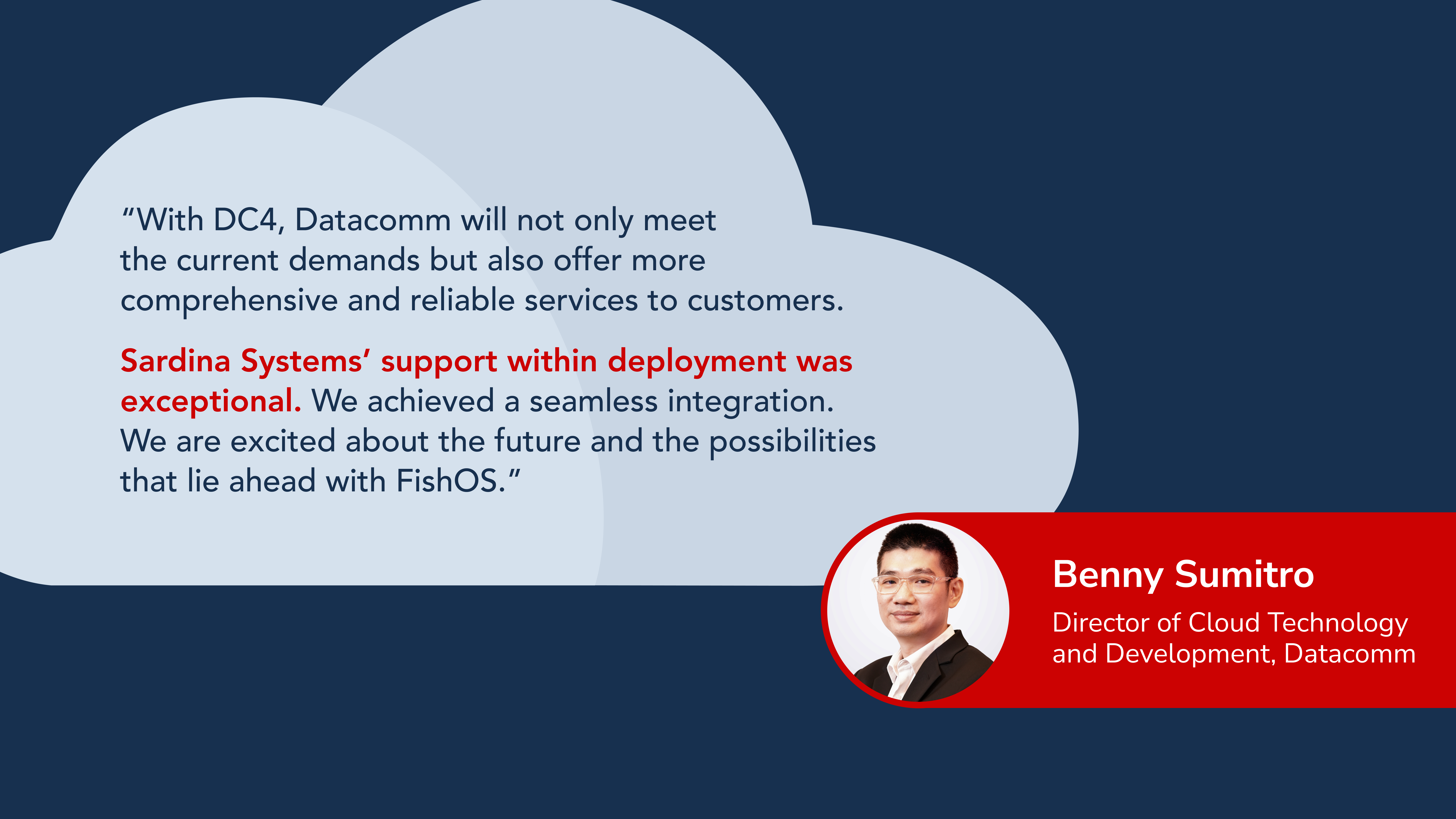
“We decided to launch a new data center because we had the internal resources and confidence in our reliable cloud platform provider, Sardina Systems. Their expertise assured us that adding a new availability zone and testing all workloads would be seamless and effective.”
Benny Sumitro, Director of Cloud Technology & Development at Datacomm
The primary objectives were clear:
- Meet the increased resource demand.
- Enhance overall system reliability and performance.
Technical Specifications and Planning
The new DC4 was designed to be a powerhouse. It featured 28 new compute nodes and 1792 cores, establishing a strong starting point with over twice the capacity of Datacomm’s existing three data centers combined.
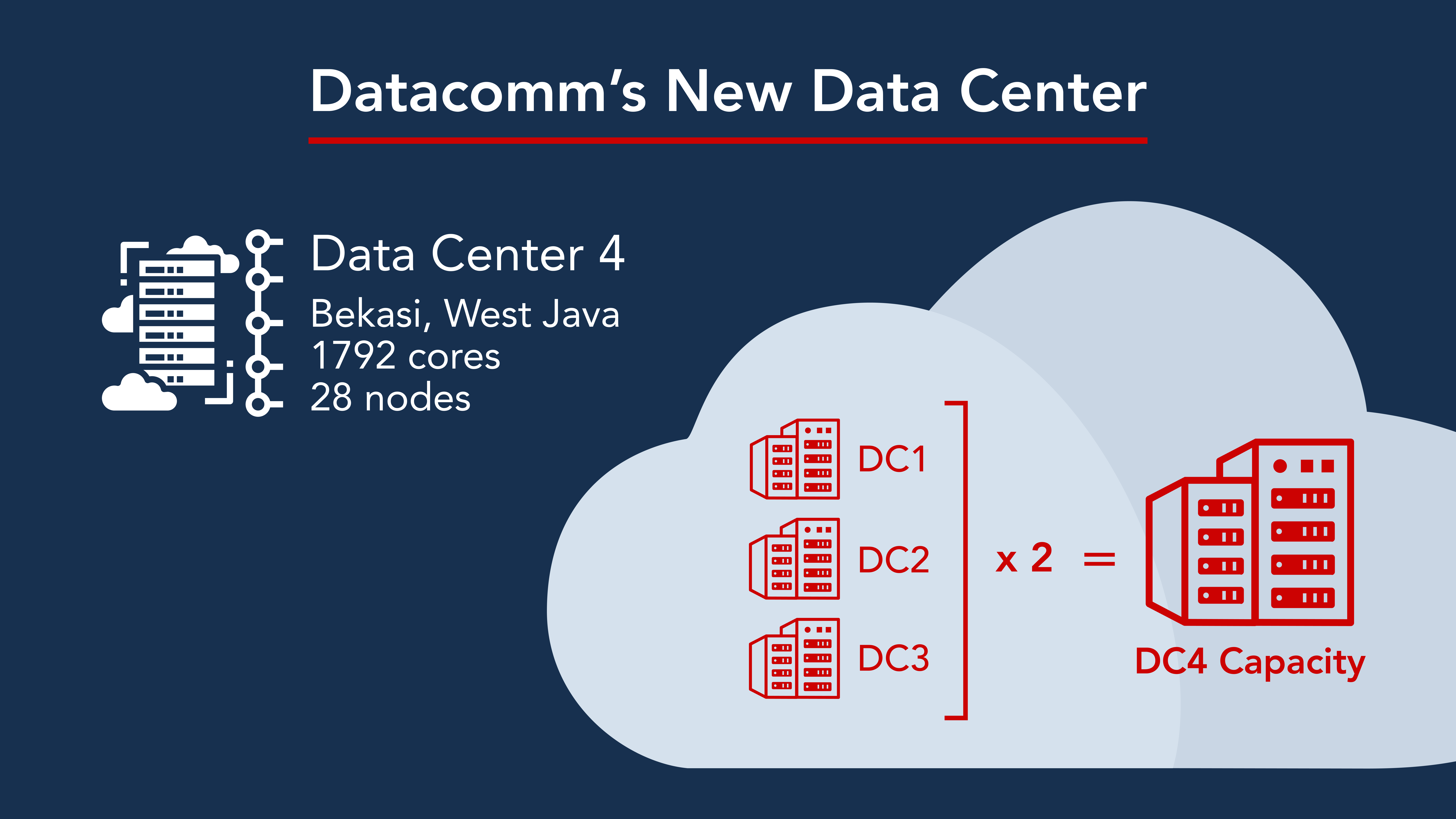
This marked a significant beginning of a journey to upgrade in terms of capacity and processing power, as DC4 utilizes a mix of Intel and AMD processors for diverse workload deployment and cost efficiency.
Deployment Process
“Overall, the process of adding the fourth availability zone and deploying the new data center went smoothly and efficiently. With the help of the Sardina Systems technical team, Datacomm managed to integrate DC4 into a single control plane, providing a unified admin interface across all infrastructure.”
Dmitry Krasovskyi, Technical Lead at Sardina Systems
The deployment process was coordinated by Datacomm’s and Sardina Systems’ technical teams and involved several critical steps:
- Advising: Sardina Systems offered expert guidance on the optimal organization of the infrastructure.
- Hardware Setup: Datacomm’s team managed the hardware setup and base OS installation.
- FishOS Integration: Sardina Systems deployed and integrated FishOS with its Health Monitoring capabilities.
- Testing: Extensive testing of OpenStack functionalities was carried out by the Sardina Systems team, while Datacomm conducted User Acceptance Testing (UAT) to ensure the system’s readiness.
Addressing Network and Software Challenges
No large-scale project is without its challenges, and the deployment of DC4 was no exception, despite meticulous planning. One of the challenges faced by Datacomm during the deployment was networking issues, particularly with Virtual Router Redundancy Protocol (VRRP).
VRRP is a crucial network protocol that ensures the high availability of routers by automatically switching to a backup router if the primary one fails. In Datacomm’s case, implementing VRRP was tricky due to their complex network setup, which involved stretched VXLAN networks over connections between data centers. This configuration requires highly reliable connections between data centers and ISPs to function properly.
Sardina Systems’ team of experts diagnosed the problem with the new DC’s VRRP in a timely manner and reported it to Datacomm. This allowed the client to promptly contact their networking provider, avoiding API instability that could lead to downtime and disruptions if not addressed.
Another challenging aspect during the deployment was an issue with Octavia in the Antelope release of OpenStack. Sardina Systems’ team discovered a problem in Octavia that could potentially disrupt the smooth operation of the data center. Showcasing their agility and technical expertise, the team swiftly patched the issue. This prompt fix was then seamlessly integrated, underscoring Sardina’s capability to quickly address and resolve bugs. This ensured continuous system reliability without having to wait for the next official release from the upstream.
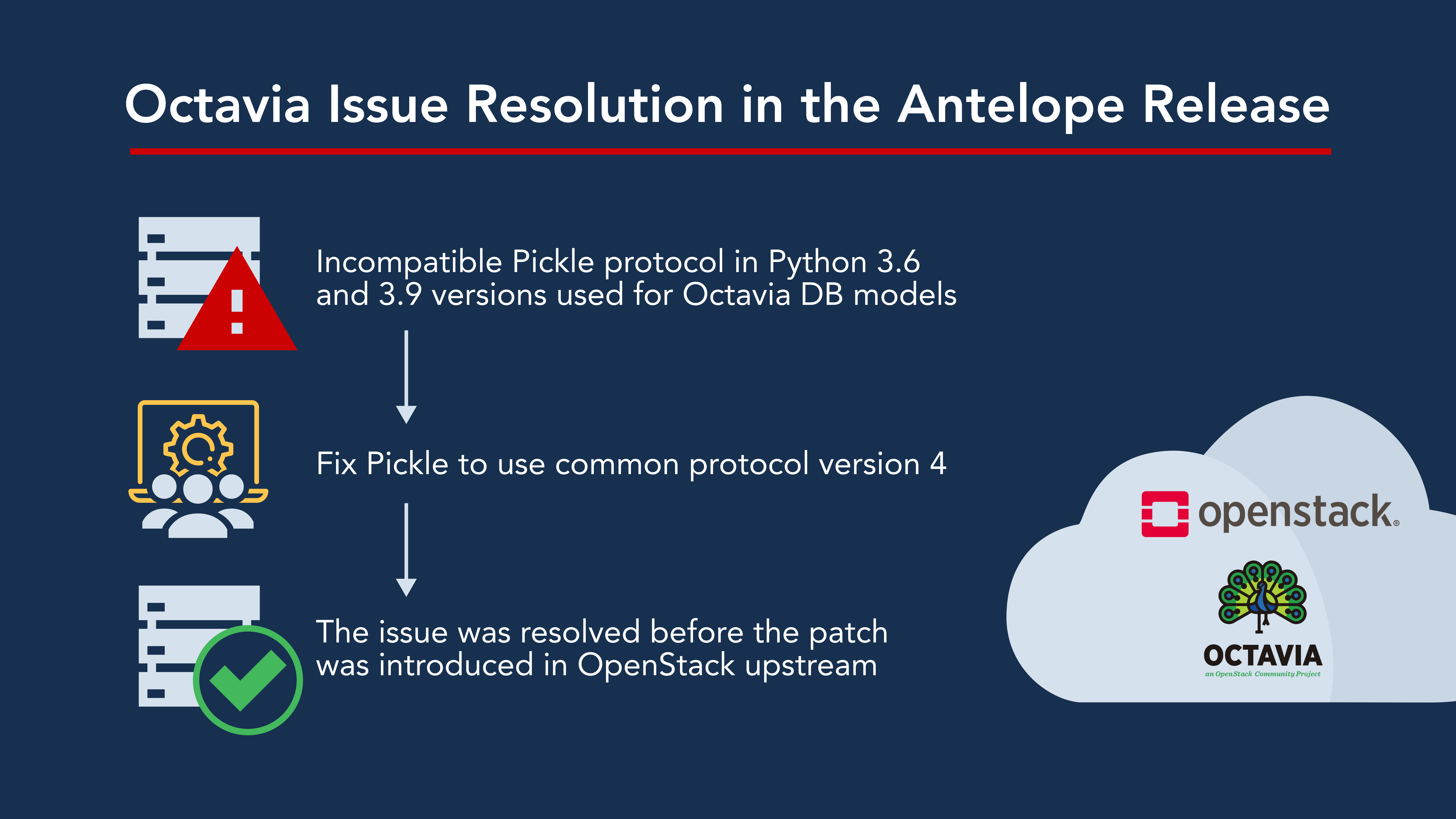
Through proactive problem-solving and expert technical intervention, Datacomm overcame critical networking and software challenges during the deployment of DC4. These efforts ensured that Datacomm’s new data center operated smoothly, delivering high availability and reliability to its customers.
Impact and Benefits
The successful launch of DC4 brought immediate and long-term benefits to Datacomm:
- Enhanced capacity and services: Over twice the increased capacity allowed Datacomm to expand its service offerings significantly, accommodating more GPU, container, and other computing workloads.
- Improved stability: Moving from a small-scale data center to a larger one enhances infrastructure stability by providing better cooling, power, and connection reliability, ensuring a more robust infrastructure for Datacomm’s clients.
- Cost-efficiency: Moving workloads from colocation to Datacomm’s own data center proved to be more cost-efficient, reducing operational expenses and increasing control over the infrastructure.
- Positive end-user experience: Customers experienced enhanced service reliability and expanded offerings, leading to increased satisfaction and trust in Datacomm’s services.
- Unified management: The seamless integration of DC4 into a single control plane allowed for a unified admin interface across all data centers, simplifying management and operations.
Recently, Datacomm surpassed 2,000 tenant networks within their FishOS infrastructure, signaling a significant milestone in their operational journey. This achievement highlights their ability to effectively manage challenges such as resource efficiency, scalability, security, automation, and multitenant support — all enabled by the advanced capabilities of Sardina FishOS.
“We are pleased to see a significant player like Datacomm Diangraha scaling their operations with Sardina Systems. Their mission aligns closely with ours — to assist businesses in the Asian region in their digital transformation journey. With FishOS, Datacomm can harness the full potential of cloud technology. The Indonesian market is experiencing rapid growth in cloud adoption, with IaaS leading the way, and we are proud to be part of this dynamic landscape.”
Kenneth Tan, Executive Director at Sardina Systems
The launch of DC4 for Datacomm Diangraha, despite some challenges, was executed flawlessly thanks to the robust support and advanced capabilities of FishOS. This underscores the importance of the right technological solutions in achieving operational excellence and meeting evolving customer demands.
For more information on how Sardina Systems and FishOS can support your data center initiatives, contact us today.