


The rapid evolution of the server market presents businesses with a critical choice: invest in a few high-performance machines or build a distributed infrastructure of multiple smaller servers. This article by Sardina Systems’ experts, prepared with our partners at Vespertec, delves into this topic and provides insights into how companies can make informed choices to meet their infrastructure needs.
At first glance, investing in a single high-performance server may seem like the best solution. However, real-world deployments tell a different story. In many cases, a distributed cluster of smaller servers, especially when combined with advanced cloud management solutions like FishOS, not only matches but often outperforms a single high-powered system in terms of cost efficiency, reliability, scalability, and ease of management.
Two Fundamental Approaches to Infrastructure
When it comes to IT infrastructure, businesses essentially face two fundamental approaches:
- High-performance servers. Monolithic systems with powerful processors, large memory capacity, and high-speed networking. These are commonly used for resource-intensive applications such as large databases, AI training, and financial modeling.
- Distributed clusters. A network of smaller, interconnected servers that share workloads. This model offers scalability, fault tolerance, and cost efficiency, making it ideal for cloud-native environments, containerized applications, and scalable web services.
However, as server technology evolves, these categories are no longer as rigid as they once were. The market now offers specialized solutions that blend elements of both approaches, catering to different business needs. Choosing the right infrastructure requires a deep analysis of workload demands, operational risks, and long-term costs.
“Enterprise-grade servers built on AMD EPYC or Intel Xeon CPUs deliver high performance for data-heavy operations. Meanwhile, energy-efficient ARM-based servers from vendors like NVIDIA and Ampere are gaining traction among organizations prioritizing sustainability,” –
Philip Kaye, Co-Founder and Director at Vespertec.
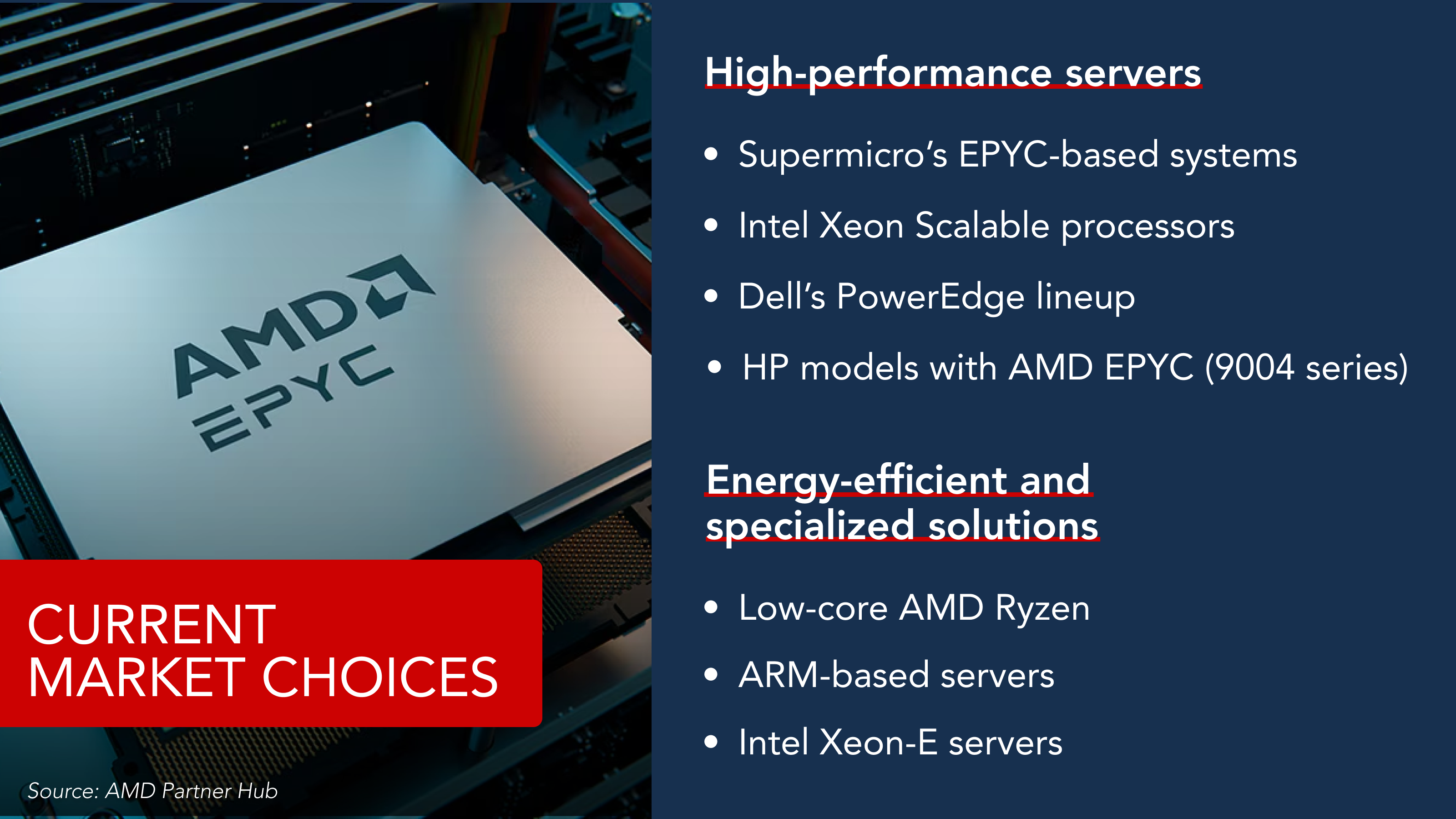
While the basic distinction between high-performance and distributed infrastructure remains relevant, businesses need to assess each approach’s nuances to make an informed decision that aligns with their operational and financial strategy. “Bigger and more expensive” is not always synonymous with “better.” Let’s explore why.
Reliability and Fault Tolerance: The Risk of a Single Point of Failure
One of the most critical drawbacks of relying on a single high-performance server is the risk of failure. If the system goes down, everything connected to it, including storage, workloads, and applications, becomes unavailable.
In a traditional single-server setup, fault tolerance is usually limited to basic protections, such as disk-level redundancy. However, with a distributed infrastructure, multiple levels of fault tolerance come into play, providing robust protection and minimizing downtime. With smaller servers distributed across a network, workloads are shared, and each server operates as a backup for others in case of failure.
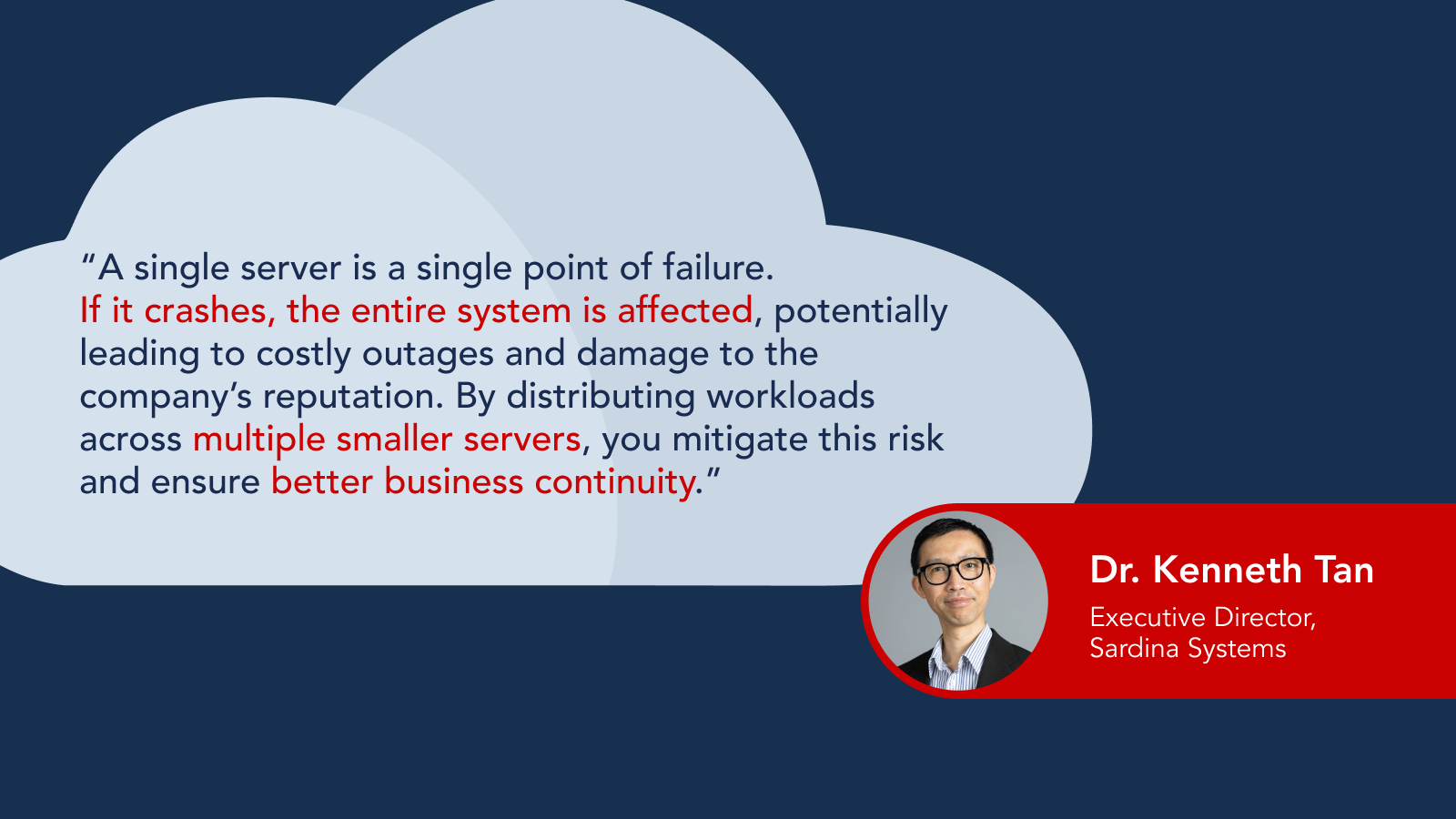
This principle is crucial for cloud-native applications, which rely on microservices and benefit from redundancy. Even for traditional enterprise workloads, a distributed approach can offer better protection against downtime.
FishOS, Sardina Systems’ OpenStack-based cloud management solution, requires at least three nodes (where compute and controller functions could be colocated) within the Standard License to ensure redundancy and availability. This ensures that if one server fails, others can seamlessly take over, preventing downtime and ensuring continuous business operations.
Scalability: Growing With Ease
Businesses experiencing growth or fluctuating workloads require an infrastructure that can adapt. A single high-powered server has fixed capabilities, making scalability complex and expensive.
A distributed setup, however, enables businesses to scale incrementally, adding servers as needed. This modular approach allows companies to allocate resources dynamically, ensuring optimal usage without overinvesting in a single, powerful machine upfront.

Downtime and Maintenance: Keeping the Business Running
Another factor businesses must consider is operational downtime during updates and maintenance. High-performance servers often require complete system reboots for software patches, firmware upgrades, or hardware maintenance. This results in business disruptions that can impact revenue and productivity.
With multiple smaller servers, updates can be performed in a rolling manner. Some servers remain operational while others undergo maintenance, reducing the impact on business continuity.
Moreover, replacing or upgrading systems can be disruptive, particularly for businesses with 24/7 uptime requirements. If not properly planned, these upgrades can result in significant downtime.
Storage Efficiency and Performance
Storage is often an overlooked factor when comparing single VS multiple-server architectures. A single powerful server may offer high storage capacity, but it does not necessarily optimize performance. Storage efficiency improves when data is distributed across multiple nodes, enhancing redundancy and retrieval speed.
“Ceph storage, which is commonly used for distributed setups, performs better with a larger number of nodes due to distributed load handling. For example, a 3-node configuration with 100TB per node offers the same capacity as 6 nodes with 50TB each, but the latter provides better fault tolerance and efficiency,” –
Kenneth Tan, Executive Director at Sardina Systems.
While some replication methods sacrifice efficiency for redundancy, techniques like erasure coding strike a balance between fault tolerance and performance.
Cost Considerations: The Long-Term Investment
While a high-performance server may seem like a cost-effective solution at first, businesses must consider long-term expenses. Power consumption, cooling requirements, and complex maintenance can increase operational costs.
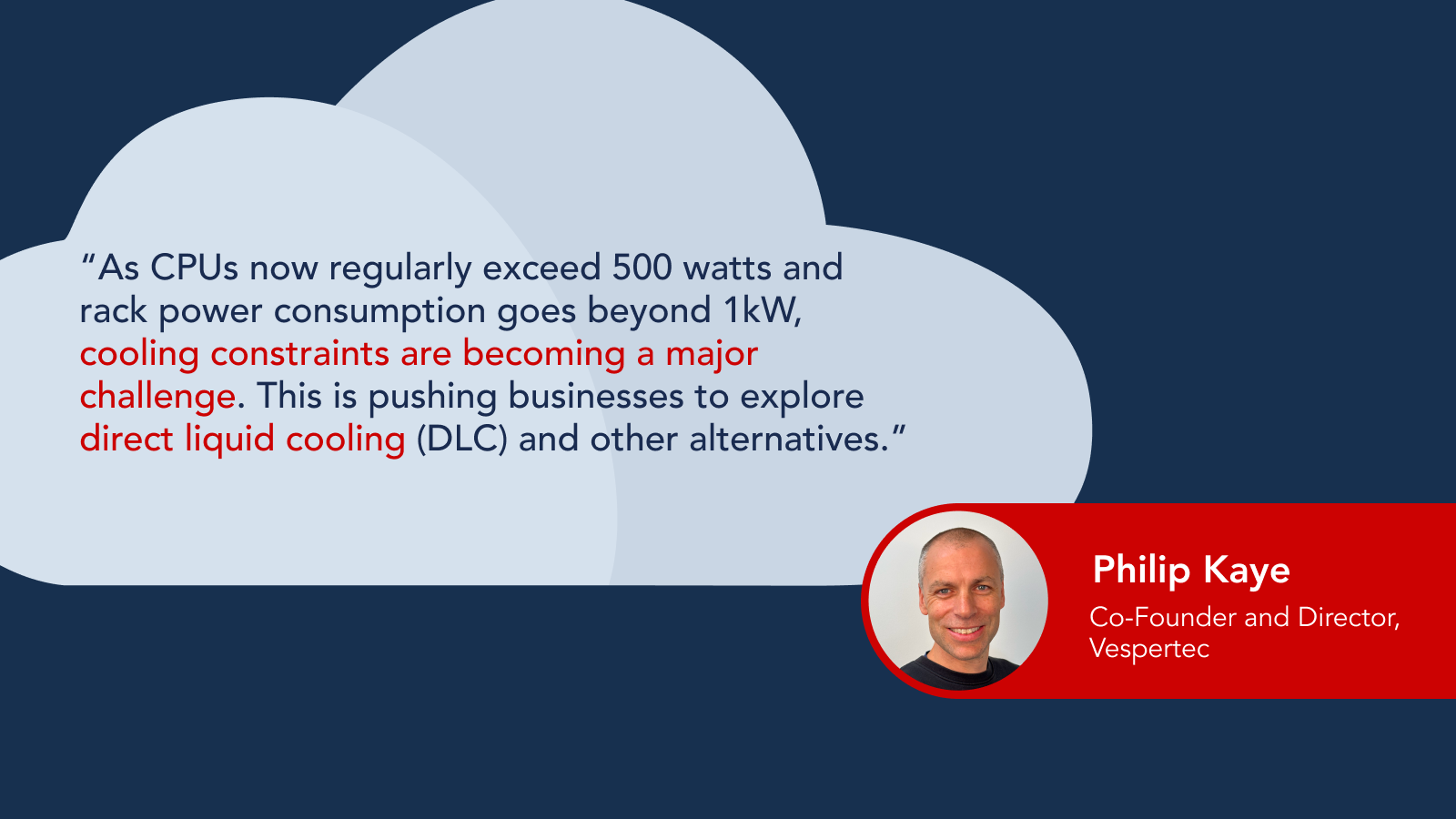
Clusters of smaller servers, on the other hand, offer a more gradual investment path. Businesses can scale their infrastructure as needed, avoiding large upfront costs and spreading out expenses over time. Additionally, modular upgrades allow companies to replace outdated servers without disrupting the entire system.
Based on Sardina Systems’ experience, cost optimization is influenced not only by factors such as energy efficiency and cooling but also by the number of servers themselves. Surprisingly, a larger number of smaller nodes can meet performance requirements at a lower overall cost.
In a recent cost analysis for a customer, a 14-node system resulted in approximately 24% savings compared to a 7-node system, while maintaining the same RAM (6,680 GB) and vCPUs (2000). This cost advantage is driven by key factors such as efficient resource allocation, improved redundancy, and higher storage efficiency.
Making the Smart Choice
For organizations evaluating their server infrastructure options, the key takeaway is clear: bigger is not always better. By understanding workload requirements, long-term costs, and the benefits of distributed systems, businesses can make smarter infrastructure investments that prioritize resilience, scalability, and cost-efficiency.
Sardina Systems, in collaboration with Vespertec, helps businesses navigate these choices, ensuring they adopt the infrastructure model that best supports their operational goals and long-term growth. Contact us today for a complimentary consultation with our technical and product teams.